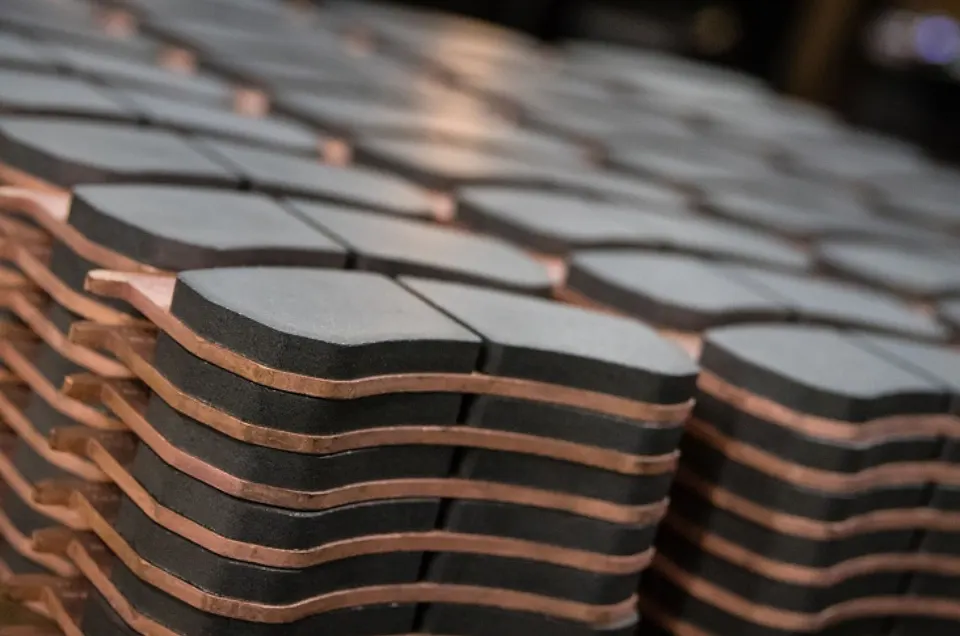
How FTL helped SDTS replace an obsolete aircraft brake pad
SDTS needed to keep an aircraft operational after its original brake pad was no longer available on the market.
FTL worked with SDTS through the technical and commercial discussions, redesigned the pad using a material that met the stated aeronautical technical requirements, adapted the solution to SDTS's aeronautical environment and manufactured the replacement component.
The resulting work supported SDTS in certifying a modification applicable to its aircraft.
A named example of obsolete-component continuity progressing from an unavailable part to a manufactured and customer-certified replacement route.
The original brake pad was no longer available
SDTS's immediate problem was component obsolescence.
The aircraft still needed to operate, but the original brake pad could no longer be obtained from the market. A stock substitution or part-number purchase was therefore not sufficient.
SDTS needed a replacement route that addressed the specific aircraft application and could support its applicable modification-certification process.
Confirmed project requirements
Replace an unavailable aircraft brake pad
Support continued aircraft operation
Meet the stated aeronautical technical requirements
Adapt the component to SDTS's aeronautical environment
Produce a manufactured replacement of acceptable quality
Support a route that SDTS could certify for its aircraft
The replacement had to work within an aeronautical environment
Replacing an obsolete aircraft brake pad required more than reproducing its visible dimensions.
The proposed component needed to address the aircraft application, the stated aeronautical technical requirements and the evidence SDTS required for its modification route.
Component function
The replacement needed to perform the required aircraft braking function.
Detailed duty-cycle and performance values have not been approved for public disclosure.
Material route
FTL redesigned the pad using a material that SDTS states met the relevant aeronautical technical requirements.
The exact material family, formulation and public material reference have not been approved for public disclosure.
Application environment
The design had to be adapted to SDTS's aeronautical environment.
Modification and approval route
The component and supporting work needed to allow SDTS to complete the modification-certification process applicable to its aircraft.
The public customer account does not identify the certification authority or the detailed approval basis.
FTL connected the technical discussion, redesign and manufacture
The public customer account confirms six central elements of FTL's response.
Direct technical and commercial collaboration
SDTS worked with FTL through both the technical and commercial aspects of the requirement. This gave the customer one route through the component-development conversation rather than a disconnected series of suppliers.
Review of the obsolete brake-pad requirement
FTL engaged with the specific problem created by the unavailable original component. The project was treated as an engineering requirement rather than a catalogue search.
Redesign of the brake pad
FTL redesigned the component for the application. The customer describes it as a redesigned pad, not an exact reproduction or like-for-like copy.
Establishment of a replacement-material route
The redesigned pad used a material that SDTS states met the relevant aeronautical technical requirements. The formulation, material family and performance values have not been approved for public disclosure.
Adaptation to the customer's aeronautical environment
FTL adapted the replacement solution around SDTS's stated operating and programme context.
Manufacture of the replacement product
FTL manufactured the redesigned brake pad. SDTS described the quality of the manufactured product as “remarkable.”
From component obsolescence to a certified aircraft modification
Obsolescence created an operational risk
- Original brake pad no longer available, aircraft still needed to operate
SDTS approached FTL for a replacement route
- Began through direct technical and commercial discussions
FTL redesigned the brake pad
- Redeveloped around the aircraft application and the information SDTS supplied
FTL established a suitable material route
- Replacement pad used a material meeting the stated aeronautical technical requirements
FTL manufactured the replacement component
- Redesigned product produced for the agreed customer route
SDTS completed its modification-certification process
- FTL's responsiveness and adaptation to the aeronautical environment supported SDTS in certifying a modification applicable to its aircraft
The aircraft could continue operating
- SDTS reports that the project allowed it to continue flying, landing and braking safely
What SDTS said about the project
“To continue flying our aircraft, we approached FTL to find replacement solutions for our brake pad problem, as the original part was no longer available on the market. The quality of our discussions, from both a technical and commercial standpoint, FTL's responsiveness in redesigning the pad with a material that meets aeronautical technical requirements, and their ability to adapt to our aeronautical environment allowed us to certify a modification applicable to our aircraft. The quality of the manufactured product is remarkable. Thanks to FTL, we can continue to fly, land, and brake safely.”
Olivier Moulin 
Attribution
Customer
SDTS
Sector
Aerospace and defence
Aerospace fit
This project is part of FTL's aerospace friction support: obsolete-component continuity, redesign and manufacture for aircraft braking and motion-control applications.
Related capabilities
Reverse Engineering · Engineering & Design · Friction Material Formulation · CNC Machining · Bonding & Finishing · Testing & Inspection
Frequently asked questions about the SDTS aircraft brake-pad project
Why did SDTS contact FTL?
What did FTL provide?
- Participated in technical and commercial discussions
- Redesigned the brake pad
- Used a material meeting the stated aeronautical technical requirements
- Adapted the solution to SDTS's aeronautical environment
- Manufactured the replacement product
- Supported the route through which SDTS certified a modification
Did FTL certify the aircraft modification?
Which aircraft was involved?
Was the original drawing available?
Which friction material was used?
Was the replacement identical to the original pad?
What testing or inspection did FTL complete?
Did the project lead to repeat production?
Can FTL guarantee the same result for another aircraft?
- Technical requirements
- Operating conditions
- Component information
- Testing
- Validation
- Approval responsibilities
Can FTL help when an obsolete component has no original drawing?
Can FTL support the complete replacement component?
Does FTL support aerospace customers outside the UK?
What should we provide with an obsolete aircraft-component enquiry?
- The application
- Existing component
- Available drawing or specification
- Reason the original source is no longer available
- Known operating conditions
- Required technical behaviour
- Applicable modification or approval context
Is an obsolete friction component putting aircraft continuity at risk?
Tell FTL what is no longer available, what the component needs to do and what technical information your team currently has.
A short initial brief is enough.
The relevant technical, engineering and commercial team members can then review the application, available evidence, replacement-material route and most appropriate next step.
Optional drawing or specification upload available. Do not upload classified, export-controlled or contract-restricted technical information through the public form.