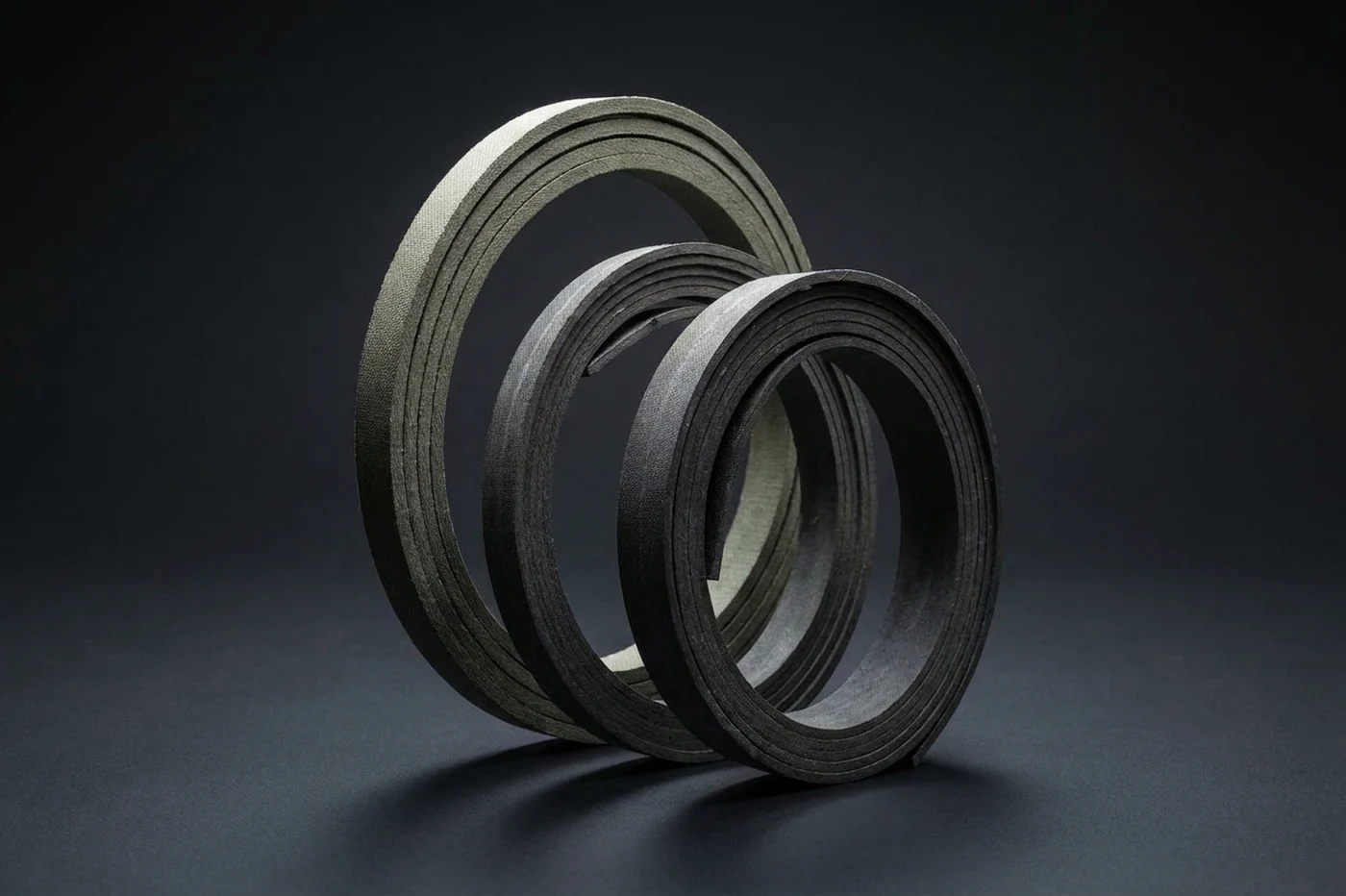
FTL133 flexible woven friction material
FTL133 is a woven non-asbestos friction material manufactured from a solid woven cotton fabric, impregnated with special resins, to produce a strong, flexible material with a high coefficient of friction.
Published values are a starting point. Selection depends on the complete application.
FTL133 technical data sheet
As published by FTL.
FTL133 is a woven non-asbestos friction material manufactured from a solid woven cotton fabric, impregnated with special resins, to produce a strong, flexible material with a high coefficient of friction.
Applications
- Suitable for dry running where a high coefficient of friction is required but where temperatures are not too high. Used on centrifuges, electro-magnetic brakes, domestic appliances, winches, cone clutches, hoists and textile machinery. May be made more flexible to aid fitting by heating in an oven at 100°C.
- Not recommended for oil immersed applications.
The full FTL133 sheet
Technical data, recommended operating range, test conditions, mating surface, bonding and the performance curves, as published by FTL.
These are summary values. Tell FTL what the material is for and the full specification follows.
Discuss FTL133 for your application
Tell us what the application is, and FTL confirms whether FTL133 fits or recommends from the full range.
Request a sample of FTL133
NOTE Summary values are indicative and must be read with the full document and its stated test conditions.
Engineering capability backed by controlled manufacture and inspection
SDTS approached FTL after the original aircraft brake pad was no longer available. FTL redesigned the pad, established a replacement material route and manufactured a component aligned with the stated aeronautical technical requirements, supporting SDTS's modification-certification process.
“To continue flying our aircraft, we approached FTL to find replacement solutions for our brake pad problem, as the original part was no longer available on the market. The quality of our discussions, from both a technical and commercial standpoint, FTL's responsiveness in redesigning the pad with a material that meets aeronautical technical requirements, and their ability to adapt to our aeronautical environment allowed us to certify a modification applicable to our aircraft. The quality of the manufactured product is remarkable. Thanks to FTL, we can continue to fly, land, and brake safely.”
Olivier Moulin 
Established in 2003, FTL's integrated chain is supported by controlled manufacture, inspection and traceability, and held to recognised quality, environmental, safety and supply-chain standards.
View Quality & Certifications →Customer logos





The SDTS example demonstrates linked engineering, material and manufacturing support.
Bring us the application, drawing or performance problem.
Tell Friction Technology what the component or friction system needs to do. A short initial brief is enough to start. The right technical and commercial people then join the conversation to understand the operating conditions, available information and required next step.
Optional drawing or specification upload. No long technical questionnaire at this stage.