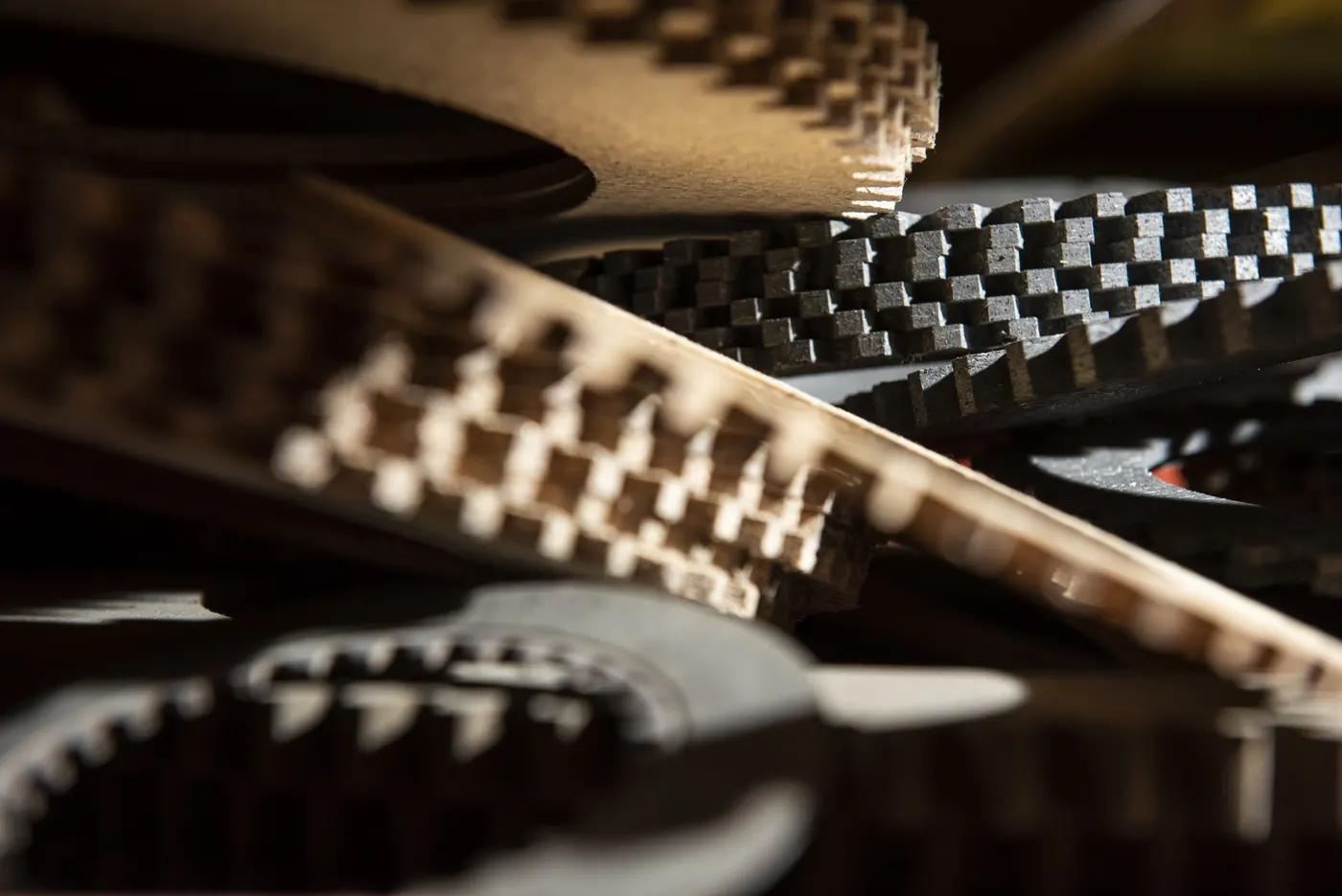
Friction discs, plates and washers for industrial clutches, brakes and torque limiters
FTL makes industrial friction discs, friction plates and friction washers in Caernarfon, North Wales, from its own friction materials. They go into torque limiters, marine gearbox clutches, aerospace actuation and safety equipment such as fall arrestors.
Start with the clutch or brake, the disc details, a drawing or the duty, not simply a part number.
We make discs, plates and washers, plain or gear-cut, machined in our own works, and bonded to backing plates and associated metal components where the part needs it.
For the wider range of materials and forms, explore our friction products.
When engineering teams need a friction disc or plate
The correct route depends on what has prompted the requirement.
A new clutch, brake or torque limiter needs a friction disc
The function is understood, but the friction material, disc or plate construction or repeatable production route has not yet been established. FTL can support the programme from application review and material selection through prototypes, testing, validation support and controlled repeat manufacture.
New Programme Support →An existing disc or plate is not performing as required
Inconsistent clutch or brake behaviour, excessive or unpredictable wear, heat concerns, or variation between parts or production batches. FTL can review the available evidence across the friction material, the disc or plate, the operating environment and the production route.
Performance Optimisation →The original disc or plate is no longer made
The machine must stay in service, but the original disc or plate, its material, drawing or supplier is no longer available. FTL reviews the part and the application before proposing a material and geometry, and does not promise an exact copy or a match to the old material.
Legacy & Obsolete Reverse Engineering →The disc or plate passes through too many suppliers
The friction material, backing plate, machining, bonding, finishing and inspection are divided between separate organisations. FTL can connect the relevant stages through one accountable manufacturing route.
Single-Source Friction Manufacturing →A prototype must progress into controlled repeat supply
The engineering solution needs to move into a defined production arrangement supported by repeat manufacturing controls, inspection, traceability, inventory holding, scheduled call-off, customer-specific packaging and identification, and delivery.
New Programme Support
For a new clutch, brake or torque limiter that needs a defined friction-material, disc or plate construction and manufacturing route. Support can include application review, material selection or formulation, disc, plate and component engineering, prototype manufacture, testing and inspection, validation support and transfer into controlled repeat production.
Legacy & Obsolete Component Reverse Engineering
For a disc or plate still required after its original material, drawing, supplier or finished component becomes unavailable. Support can include existing-part and evidence review, dimensional assessment, geometry redevelopment, alternative material selection or development, prototype manufacture, testing and revalidation support and repeat manufacture. FTL is not a relining service for used plates.
Friction System Performance Optimisation
For an existing disc or plate with inconsistent clutch or brake behaviour, excessive or unpredictable wear, heat concerns or production-repeatability problems. Support can include symptom and evidence review, operating-condition assessment, investigation of material and component factors, alternative formulation or component work, comparative prototypes, testing and inspection and implementation support.
Move from a friction disc or plate requirement to a controlled engineering and supply route
A custom friction disc or plate project should define more than the part's visible shape.
The engineering route must establish the required function, friction material, disc or plate construction, manufacturing stages, inspection evidence and responsibilities that apply before repeat supply begins.
Potential engineering outcomes
- A shared definition of the application and required clutch, brake or holding function
- A friction-material selection or development route
- A defined disc or plate geometry and backing-component route
- A prototype and test plan
- Agreed inspection and acceptance requirements
- Clear FTL and customer validation responsibilities
- A documented decision on whether further development is required
Potential manufacturing and supply outcomes
- One accountable route from friction material to finished disc or plate
- Controlled machining, bonding, finishing and inspection
- Defined production records and traceability
- Progression from prototype into repeat manufacture
- Inventory and scheduled call-off where agreed
- Customer-specific packaging and labelling
- Scheduled delivery
Performance, service life, lead time and approval outcomes depend on the application, available information, agreed testing and respective customer and FTL responsibilities.
Made to your drawing or sample: machined, and bonded where the part needs it
FTL makes the material, and the finished component cut from it. Not every project requires every stage.
Send a drawing, a sample or a specification. FTL proposes a grade or a formulation route and makes the part. Discs and special shapes are made on request in FTL's own materials, and friction sheet and roll are supplied too.
FTL machines, bonds, tests and inspects in-house. Where a disc needs a metal backing or carrier, FTL can machine associated metallic components and bond the friction material to them within an agreed scope. Thicker sheet, other sizes, special shapes and materials not listed here are on application.
Prototypes, low-volume batches and repeat supply
FTL supports prototypes and repeat manufacture of friction discs and plates.
A friction disc or plate project can start with a prototype, move to a low-volume batch and then into a production batch, with scheduled call-off and export where agreed. Quantity and price come after technical fit. For a disc or plate with no drawing, the reverse engineering route starts from the existing part.
What FTL needs to know to quote a friction disc or plate
A material name, nominal coefficient or existing part number does not define the complete requirement.
Begin with the clutch or brake and what the part must do. Send what you have: the application, a drawing, a CAD file or the existing part, the current material reference if you know it, the mating or interface surfaces, and whether it runs dry or in oil. FTL confirms technical fit after reviewing the specific application.
What is the part for?
- Clutch, brake, torque limiter or damper
- What the part does in the application
- Whether the machine is new or already in service
- What has prompted the enquiry
- Whether the requirement is for friction material, a cut disc, plate or washer, or a bonded component
Is this a new part or an existing one?
- A new programme
- A new disc or plate for an existing machine
- An existing disc or plate under performance review
- An old disc, plate, material or supplier no longer available
- A supply-continuity issue
- A prototype moving towards production
What conditions will it run in?
- Load
- Speed
- Whether it runs dry or in oil
- The mating or interface surfaces
- Available installation space
- Known wear or heat concerns
A multi-plate pack, side on: friction discs, in green and toothed on the inside edge, alternate with mating plates toothed on the outside edge, between an end plate and a pressure plate. Clamping force presses the pack together and torque passes through it.
A torque limiter in section: a hub between two friction washers, in green, clamped by a spring. Above its set torque the hub slips between the washers. Every question reads into the same disc, plate or washer.
What technical information is available?
- A drawing, partial drawing or CAD file
- An existing part or sample
- The current material reference, if known
- Specifications
- Required performance
- Test or inspection records
A complete technical pack is not required before the first conversation.
What must the finished part demonstrate?
- Required friction behaviour
- Wear expectations
- Heat requirements
- Dimensional requirements
- Bonding or backing-component requirements
- Inspection requirements
- Acceptance evidence
- Validation and approval responsibilities
How will it be supplied?
- The grade you already have in mind
- Quantity and prototype quantities
- Expected annual volumes
- Repeat-production schedules
- Packaging, labelling and identification
- Delivery requirements
Expected annual volumes are discussed after the application and technical fit have been established.
Friction disc and plate grades FTL makes
FTL makes friction discs, plates and washers in 14 grades. Twelve are organic, FTL129 is woven and FTL141.1 is Kevlar.
Each grade links to its data sheet. Eight are made for discs, washers, clutches and torque limiters, and six more are also supplied as discs. Sizes are on application. For sheet and roll, see friction sheet material.
| Grade | Type and form | Used for | Running condition | Friction coefficient, dynamic / static |
|---|---|---|---|---|
| FTL172 | Organic, rigid | Toothed or geared friction discs; agricultural torque limiting devices | Ask FTL | 0.40 / 0.59 |
| FTL175 | Organic, rigid | Friction washers; industrial clutches; industrial brakes; torque limiters | Oil resistant | 0.50 / 0.60 |
| FTL177 | Organic, rigid | Continuous brakes; friction washers; torque limiters | Ask FTL | 0.35 / 0.35 |
| FTL178 | Organic, rigid | Industrial clutches; friction washers; gear discs for industrial devices | Ask FTL | 0.45 / 0.50 |
| FTL087 | Organic, rigid | Damper technologies; gear toothed discs; static brakes | Oil resistant | 0.45 / 0.50 |
| FTL146 | Organic, rigid | Light to medium duty gear tooth facings and notched drivers | Dry or oil-immersed | 0.35 / 0.35 |
| FTL127 | Organic, rigid | Clutches for marine gearboxes; clutches for machine tools, presses and other industrial plant and machinery | Dry only, not for oil-immersed running | 0.32 / 0.34 |
| FTL128 | Organic, rigid | Clutches for marine gearboxes; clutches for machine tools, presses and other industrial plant and machinery; gear-cut discs for multi-plate clutches | Dry or oil-immersed | 0.38 / 0.30 |
| Grade | Type and form | Used for | Running condition | Friction coefficient, dynamic / static |
|---|---|---|---|---|
| FTL126 | Organic, rigid | Crane and excavator brake and clutch linings | Dry | 0.42 / 0.38 |
| FTL129 | Woven, flexible | Industrial clutches | Dry | 0.42 / 0.45 |
| FTL131 | Organic, rigid | Industrial clutches | Dry | 0.38 / 0.40 |
| FTL135 | Organic, rigid | Industrial disc brakes | Dry | 0.42 / 0.38 |
| FTL135.1 | Organic, rigid | Industrial disc brakes | Dry | 0.42 / 0.40 |
| FTL141.1 | Kevlar, rigid | Industrial disc brakes | Ask FTL | 0.50 / 0.60 |
NOTE Published summary values come from FTL's material library. Each data sheet gives the full technical data. FTL confirms technical fit after reviewing the specific application.
For brake pads for industrial disc brakes, see industrial brake pads. The full list of materials is in the data sheet library.
Inputs that shape the material decision
- Required braking or holding behaviour
- Coefficient stability
- Wear rate
- Heat and thermal performance
- Load, speed and environmental exposure
- Mating or interface surfaces
- Disc, plate and backing-component geometry
- Bonding and finishing requirements
- Inspection and validation evidence
The choice should follow an application review rather than a material-family comparison in isolation.
The summary values are a starting point. Final material selection depends on the complete application and agreed validation route.
Friction discs and washers for torque limiters and slip clutches
FTL makes the friction part, the disc or washer, not the torque limiter.
FTL makes friction discs and friction washers for torque limiters in three grades. FTL172 is for toothed or geared friction discs and agricultural torque limiting devices. FTL175 is an oil resistant friction material for friction washers, industrial clutches, industrial brakes and torque limiters. FTL177 is for continuous brakes, friction washers and torque limiters, and it is a low wearing material suited to constant operation.
FTL177 has a relatively high graphite content, which reduces the difference between its dynamic and static friction coefficients and its operational noise level. FTL confirms technical fit after reviewing the specific application.
FTL's aerospace application examples include rotary dampers and torque limiters. Technical fit must be confirmed for the individual application.
Gear-cut, toothed and geared friction discs
FTL machines friction discs with teeth on the inside or outside edge, in-house.
Several FTL grades are made for gear-cut or toothed discs. FTL127 has high physical strength, and its discs can be gear-cut on either the inside or outside circumference if required. FTL128 machines well, and its discs can readily be gear cut for use in multi-plate clutches.
FTL172 is for toothed or geared friction discs, FTL087 for gear toothed discs, FTL178 for gear discs for industrial devices and FTL146 for light to medium duty gear tooth facings and notched drivers.
FTL cuts the teeth with CNC machining, in the same works that makes the friction material. Tooth counts, diameters and tolerances are confirmed for the individual project.
Friction washers
Three FTL grades are made for friction washers: FTL175, FTL177 and FTL178.
FTL cuts friction washers from the material to your drawing. FTL175 is an oil resistant friction material, and FTL177 and FTL178 are low wearing materials suited to constant operation. FTL makes the washer, not the torque limiter or clutch it goes into.
A controlled path from friction disc or plate brief to repeat manufacture
The exact sequence varies by project, but each stage should produce enough evidence to support the next engineering decision.
Establish technical fit
- Application + required function
- New, existing or obsolete
- Programme stage
- Performance or supply concern
- Information available
Define application requirements
- Clutch, brake, torque limiter or damper
- Load, speed, heat, contamination
- Disc, plate, backing-component and mating-surface information
- Required friction behaviour
- Existing performance evidence
- Inspection and documentation needs
Establish material and component route
- Established grade or development work
- Disc or plate geometry development
- Backing component
- Machining, bonding, finishing, inspection stages
- What remains unknown
Agree prototype and test plan
- Material or component variants
- Prototype quantities
- Manufacturing stages
- Features and dimensions to inspect
- Tests + acceptance evidence
- FTL and customer responsibilities
Manufacture the prototype parts
- Friction-material production
- Friction and metallic-component machining
- Surface preparation
- Bonding, finishing, assembly
- Inspection
Test, inspect and refine
- Agreed material, dynamic, dimensional or bond testing
- Evidence reviewed against requirements
- Revise material, geometry or route where needed
Support validation and approval
- Engineering, manufacturing, test, inspection and traceability evidence within scope
- Final machine, system, customer or regulatory approval responsibilities agreed per project
Transfer into controlled repeat supply
- Repeat-production controls
- Inspection and traceability
- Inventory holding, scheduled call-off
- Customer-specific packaging and identification
- Export documentation and delivery
Testing and inspection tied to defined engineering questions
Testing should be selected around what the project needs to establish, not used as a generic claim that a disc or plate will perform in every clutch, brake or torque limiter.
Depending on the agreed scope, a project can draw on coefficient-stability and wear-rate assessment, thermal-performance and bond-integrity testing, CMM dimensional inspection and production evidence such as in-process checks, final inspection and batch traceability. The available methods, conditions and acceptance evidence are described in full on the testing and inspection capability page.
The exact samples, test conditions, methods, acceptance criteria and customer responsibilities must be agreed before testing begins.
Keep the friction material connected to the finished disc or plate
A fragmented route can divide responsibility between the material formulator, friction-component machinist, backing-component supplier, bonder, finisher, test provider and inspector.
FTL can connect the relevant stages through one engineering and manufacturing chain, helping keep the material, component and production decisions aligned and the friction material connected to the finished disc or plate.
The full connected route, from application review through friction-material selection, machining, bonding, finishing, testing and traceability to scheduled supply, is set out on the Single-Source Friction Manufacturing page.
Actual lead-time, procurement or cost benefits depend on the current supply arrangement and agreed project scope.
Friction discs and plates for industrial and multi-plate clutches, dry or oil-immersed
FTL makes the discs and plates for clutches, not the clutches themselves.
Do not select a friction material from the word clutch alone. For the disc or plate, FTL reviews the load, speed, heat, operating environment, mating surface and the test and validation evidence required, and each enquiry still needs a review of the individual clutch and its operating environment.
Marine gearbox clutches
FTL127 and FTL128 are made for clutches for marine gearboxes.
Machine tools, presses and industrial plant
FTL127 and FTL128 are made for clutches for machine tools, presses and other industrial plant and machinery. FTL175, FTL178, FTL129 and FTL131 are made for industrial clutches too.
Multi-plate clutches
FTL128 machines well, and its discs can readily be gear cut for use in multi-plate clutches.
Dry or oil-immersed, grade by grade
FTL127 is for dry running only. FTL128 and FTL146 may be used dry or oil-immersed. FTL126, FTL129 and FTL131 are for dry running, and FTL175 and FTL087 are oil resistant.
These are application contexts rather than stock product categories. FTL should confirm technical fit for every enquiry.
Questions buyers need answered before approving a friction disc or plate
Can FTL match or improve the current disc or plate performance?
FTL can review the current disc or plate, available material information, operating conditions and required behaviour before proposing an established, optimised or newly developed route. Whether performance can be matched or improved depends on available application evidence, defined operating conditions, disc or plate construction, agreed test conditions, acceptance criteria and validation responsibilities. No outcome is promised before the review and required development work are complete.
Is the proposed grade already proven in service?
Where relevant application history or established-material evidence exists, FTL can identify it during the technical discussion. A new, modified or redeveloped application may still require project-specific testing and customer validation.
How does FTL support consistent quality and repeatability?
The available route connects friction-material formulation, disc and component engineering, machining, surface preparation, bonding, finishing, testing, inspection, production documentation and batch and lot traceability. The exact production controls and acceptance requirements are agreed for the individual project.
Can FTL manufacture the complete bonded component?
Yes, where the project fits FTL's confirmed scope. FTL can support the friction material and complete-component route through engineering, machining, bonding, finishing, testing, inspection and repeat supply.
Can FTL supply the parts sooner?
There is no standard lead time for every friction disc or plate project. Timing depends on information available, material-development work, disc and backing-component complexity, prototype iterations, testing and inspection, customer validation, production quantities and supply requirements. FTL confirms the proposed stages and timing after the initial technical review.
Can the price be improved?
Pricing depends on the agreed engineering, material, component, testing, documentation, volume and supply scope. The first conversation establishes technical fit. Commercial options can then be reviewed against the actual requirement rather than a standard online price.
A trusted, accountable supplier since 2003
High-performance friction and braking solutions, backed by decades of in-house expertise and made in North Wales.
Company-level standards support organisational and manufacturing assurance. Material suitability, component acceptance and programme requirements must still be agreed for the individual industrial application.
Friction engineering backed by controlled manufacture
SDTS approached FTL after an original aircraft brake pad became unavailable. FTL redesigned the pad, established a replacement material route and manufactured a component aligned with the stated aeronautical technical requirements, supporting SDTS's modification-certification process. This is an aircraft brake-pad redevelopment example that demonstrates relevant manufacturing capability rather than industrial-equipment proof.
“To continue flying our aircraft, we approached FTL to find replacement solutions for our brake pad problem, as the original part was no longer available on the market. The quality of our discussions, from both a technical and commercial standpoint, FTL's responsiveness in redesigning the pad with a material that meets aeronautical technical requirements, and their ability to adapt to our aeronautical environment allowed us to certify a modification applicable to our aircraft. The quality of the manufactured product is remarkable. Thanks to FTL, we can continue to fly, land, and brake safely.”
Olivier Moulin 
Confirmed organisational proof
- ISO 9001:2015, BSI certificate FS 504348, for the manufacture, warehousing and distribution of friction materials for industrial brakes and clutches application
- AS9100D / EN9100:2018, BSI certificate FM 818472, for the manufacture of aerospace friction components for brake, clutch, actuator and control-surface systems
- More than 20 years of experience
- Friction and metallic-component machining
- Controlled bonding and finishing
- Material, dynamic and shear testing
- CMM dimensional inspection
- Batch or lot traceability, with a document pack for each project that may include a certificate of conformity, inspection report, test report and material certificate
Customer proof





FTL also supplies friction discs for fall arrestors, a safety equipment application.
Is FTL the right route for your friction disc or plate requirement?
FTL is a strong fit when:
- Your team has an application brief rather than a stock-parts request
- A new disc or plate requires a custom material or component route
- An existing disc or plate has wear, heat or performance concerns
- The original material, drawing, supplier or complete disc or plate is obsolete
- The requirement includes a bonded disc or backing component
- Prototype work may need to progress into repeat manufacture
- Testing, inspection and traceability matter
- You want fewer suppliers across material, machining, bonding and finishing
- The finished parts require scheduled supply
A different route may be more appropriate when:
- You need an off-the-shelf disc immediately
- You are purchasing solely by part number
- You need a stock catalogue
- Price is the only selection criterion
- No technical or manufacturing review is required
- You need used plates relined or refurbished
- You need a complete torque limiter, slip clutch or coupling as a unit
- You need riveted facings
Questions about friction discs and plates
What is a friction disc?
What does a friction plate do?
Are friction plate and clutch plate the same?
What friction material should I use in a torque limiter or slip clutch, and who supplies it in the UK?
What is the best material for a clutch plate?
What material is a friction disc made of?
What are the different types of friction clutches?
How does a friction clutch work?
Is clutch material asbestos?
Ask an FTL engineer about friction discs and plates
A part number, a machine, or the problem in your own words.
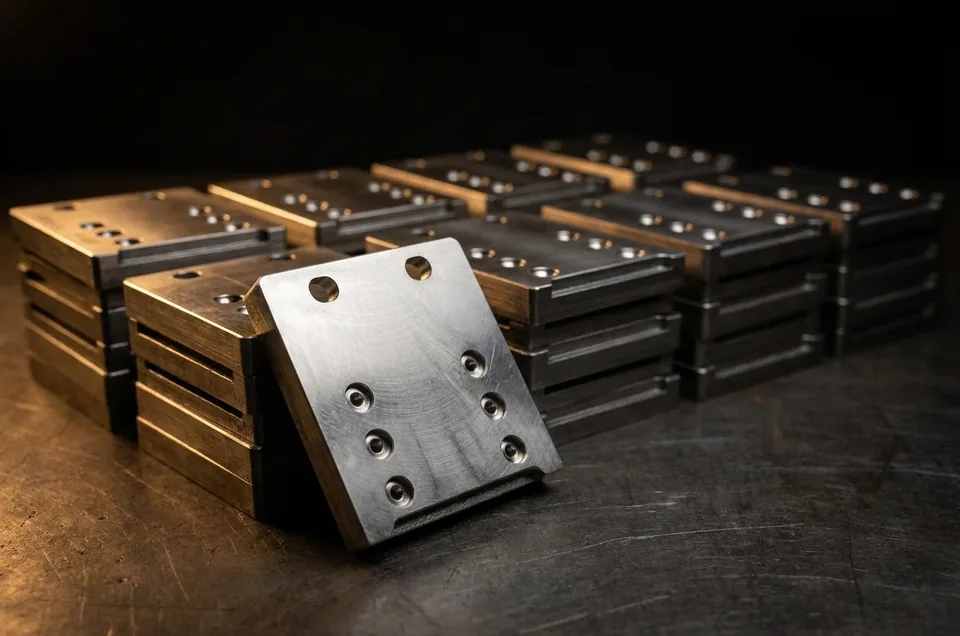
Ask for a quote on friction discs, plates or washers.
Send FTL the drawing or sample details, the material reference if you know it, and whether the disc runs dry or in oil.
FTL reviews technical fit first. Quantities and pricing follow once the application is understood.
Optional drawing or specification upload available.